GAME-BASED
.svg)
.png)
Turn quizzes into interactive games with music, timers, and live leaderboards that energize the classroom. Sprints in Engageli classrooms encourage active learning while providing instructors instant formative assessment to gauge gaps in learner understanding. Leaderboards encourage friendly competition, awarding points for both speed and accuracy to increase focus, motivation, and engagement.
In Playback Rooms, sprints bring that same competitiveness and time pressure to asynchronous learning. Learners can see how they compare to others on the leaderboard, adding a sense of challenge and momentum that keeps them motivated even outside of live class.
Educational research has found positive effects of digital game-based learning on learners’ problem-solving ability. Games are not simply engagement tools, they can be structured learning environments that support meaningful academic outcomes.
Quick review games serve a dual purpose: they reinforce concepts while giving instructors a low-stakes way to assess participation and identify gaps in understanding, all while building an engaged classroom community. Ultimately, the conversation around game-based learning is no longer about whether it works, but whether it is an integrated part of active learning capabilities in the classroom.
Engageli makes game-based learning a seamless part of the virtual classroom, giving instructors the tools to turn everyday instruction into engaging, interactive learning experiences. Instead of sending learners to third-party platforms, Engageli keeps every response within the classroom and captures the data in engagement analytics, giving instructors a complete view of participation and understanding, to identify areas where additional support may be needed.


Start class with a few questions to find out what students already know.
“What do you remember from last week's lesson?”
It gets everyone answering immediately rather than waiting for volunteers to raise their hand and answer individually at the podium.

Instead of just lecturing, an instructor can stop periodically and run a Sprint.
Teach → Sprint questions → See results → Clarify → Continue
Sprints add points, leaderboard rankings, timers, sounds, and competition, making the same knowledge check feel more like a game.

The teacher run a sprint to see which questions the class is getting wrong.
Sprint → Spot the gap → Reteach → Reinforce
Instructors stop and reteach a concept and focus on the misunderstanding, rather than discovering the problem later on an exam.
Create a fast-paced trivia game where learners compete in their virtual table groups to answer questions within a set time limit. Use Engageli’s timer feature to add excitement and encourage quick thinking. Learners can use the virtual whiteboard to write down their answers collaboratively and share them with the class.
Name each table with team names to spark teamwork and friendly competition.
.png?width=550&height=310&name=Tables%20(9).png)
.png?width=550&height=310&name=Quiz%20Game%20(2).png)
Host a quiz show challenge where tables collaborate and compete to answer questions. Use Engageli's podium to run the game, with raised hands determining the order of responses.
The game turns learning into a high-energy experience that motivates quick thinking and supports knowledge mastery. A quiz game creates an interaction point that resets attention and keeps learners mentally engaged. Quiz games quietly turn assessment into interactive activities, giving instructors immediate insight into knowledge gaps.
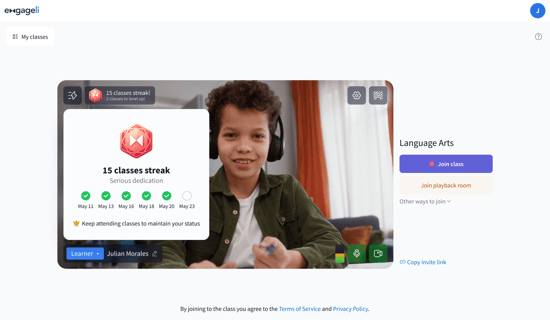
Coming soon! Encourage learners to show up consistently, turning participation into a habit rather than a one-time effort using attendance streaks. Streaks reinforce regular presence, helping learners stay on track and reducing drop-off over time. Consistent attendance builds classroom continuity, helping learners stay engaged, retain knowledge, and ultimately achieve stronger outcomes.
Learners love streaks because they turn everyday tasks into a fun challenge with clear goals and instant rewards. The sense of progress and “don’t break the chain” motivation makes them feel accomplished and eager to keep going.
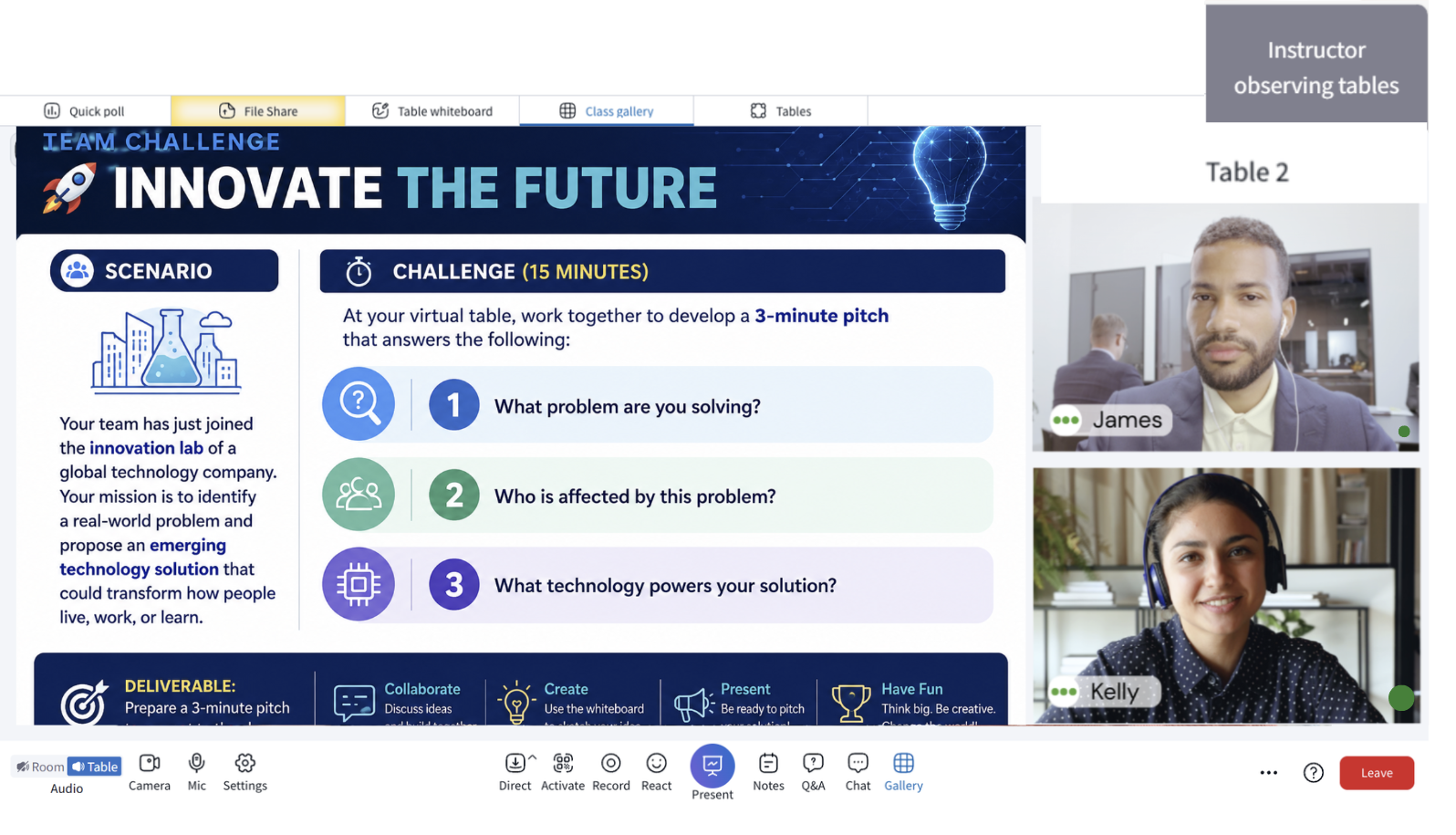
Transform online learning into an active, collaborative experience by placing learners in small virtual groups to solve problems and complete activities together. Each team works at its own virtual table with a timer countdown to discuss ideas, build consensus, and submit a shared response.
Team Challenges tap into learners' natural desire to collaborate and compete. When learners are actively discussing, explaining concepts to one another, and working toward a common goal, they're more likely to stay engaged, retain information, and enjoy the learning process.