

Asynchronous learning is an educational method where instruction and coursework occur on the learner's own schedule by themselves. Instead of attending live classes at defined times, learners access pre-recorded videos, readings, and complete assignments online. Interaction with peers occurs through discussion boards and communication with instructors is done by email rather than in real-time.
Learning in Constant Motion
An asynchronous-first approach is important in higher education because it meets learners where they are, providing flexibility for diverse schedules, time zones, and life responsibilities. This is especially critical for working adults, global learners, and non-traditional students who need access to high-quality education without being constrained by fixed class times. Even when learners have access to live classes, their participation when they miss class is important.
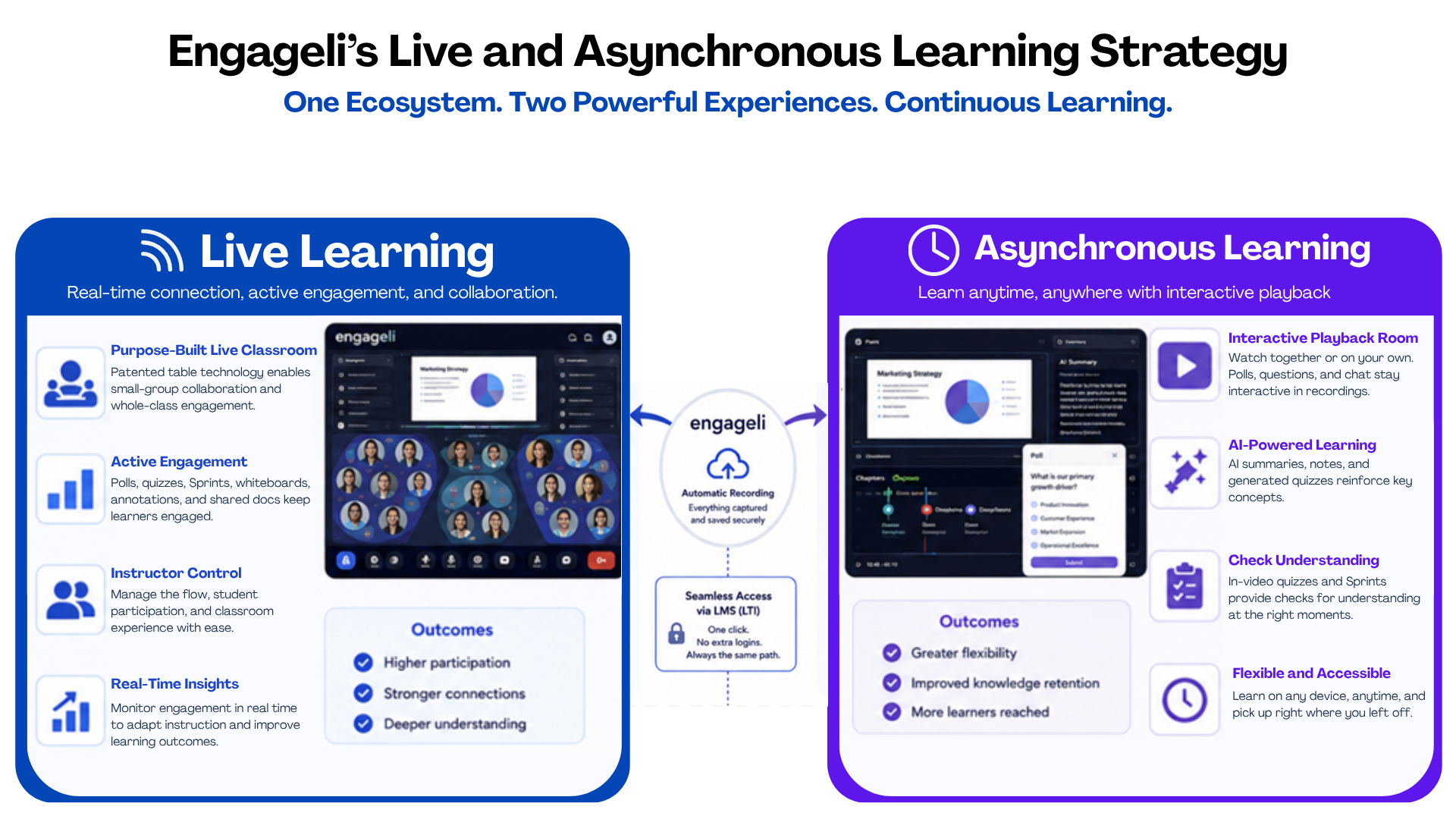
Current landscape and drawbacks
Most universities combine multiple technologies of an LMS for course management and video management system for streaming making the learning video centric.
In these environments:
- The LMS serves as the system of course records and manages enrollment, grades, assignments, and discussion boards.
- The video platform stores and streams recorded lectures.
- Learners typically watch recordings by clicking the lecture link from the LMS. The lecture streams from the video management system and has limited interaction beyond occasional embedded quizzes.
- Instructors can see who viewed video recordings and when in the video management system.
The limitations of this model include
- Current asynchronous courses center on watching lectures and reading materials, which has reduced opportunities for active thinking or application in real time.
- Feedback loops are delayed, as questions may go unanswered for hours or even days. As a result, misunderstandings can persist and compound, leading to gaps that negatively affect subsequent learning.
- Interaction is typically restricted to discussion boards where conversations are delayed and fragmented and makes it harder to build a learning community.
- Instructors often have limited insight into whether learners are struggling until quizzes are submitted.
Consistent digital campus
From an institutional perspective, asynchronous-first models enable scalability and consistency. Content can be reused, refined, and delivered to larger audiences without sacrificing quality, while also ensuring every student has access to the same core learning experience. In addition, the need to constantly schedule and check faculty availability is eliminated providing a cadence of offering on the catalog.
The asynchronous learning offering needs to be interactive and immersive, so that institutions have good completion rates. Completion at the course level directly impacts institutional retention metrics and graduation rates, for higher tuition revenue stability. In addition, completion rates are frequently used as quality indicators by ranking systems, accreditation bodies, and prospective students which is critical for recruitment and enrollment numbers.
Attributes of a superior asynchronous learning platform
The strongest asynchronous learning platforms provide:
- Flexibility for learners to study on their own schedule
- Interactive content rather than passive video
- AI-assisted learning and personalized support
- Embedded assessments and reflection prompts throughout the learning experience
- Podcast-style audio content designed for neurodiverse learners
- Rich analytics on engagement and comprehension
- LMS integration for completion and engagement passback
- Digital note-taking for capturing key points
- Accessibility features such as captions, transcripts, and mobile support
Transforming class recordings into interactive learning
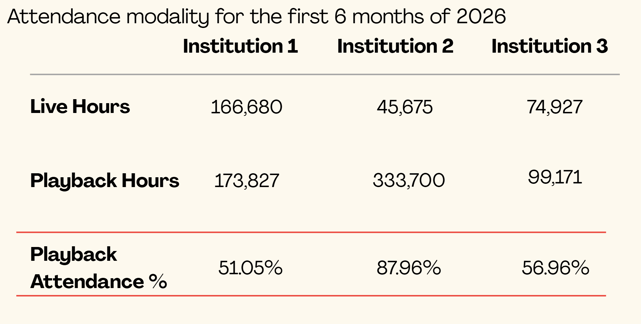
With the move to Engageli’s asynchronous learning platform, higher ed institutions were able to track asynchronous attendance for the first time in the institution’s history.
Early higher education adopters of Engageli were startled when they observed significantly higher asynchronous attendance compared to live participation. These insights have informed new academic policies that use live class sessions to actively enhance engagement in the recorded classroom experience.
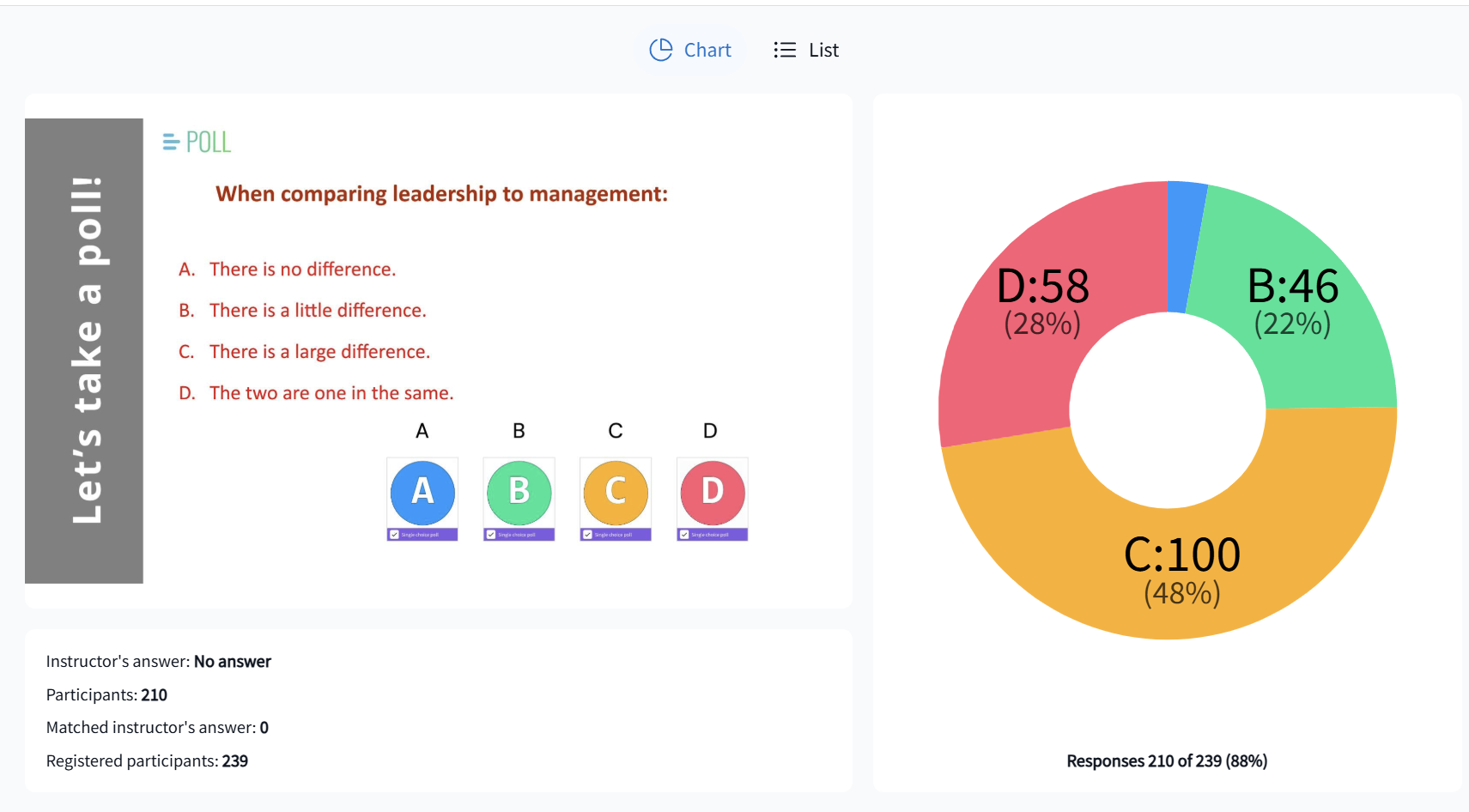
Instructors can identify learning gaps through asynchronous quiz responses and supplement the playback room with additional activities and materials.
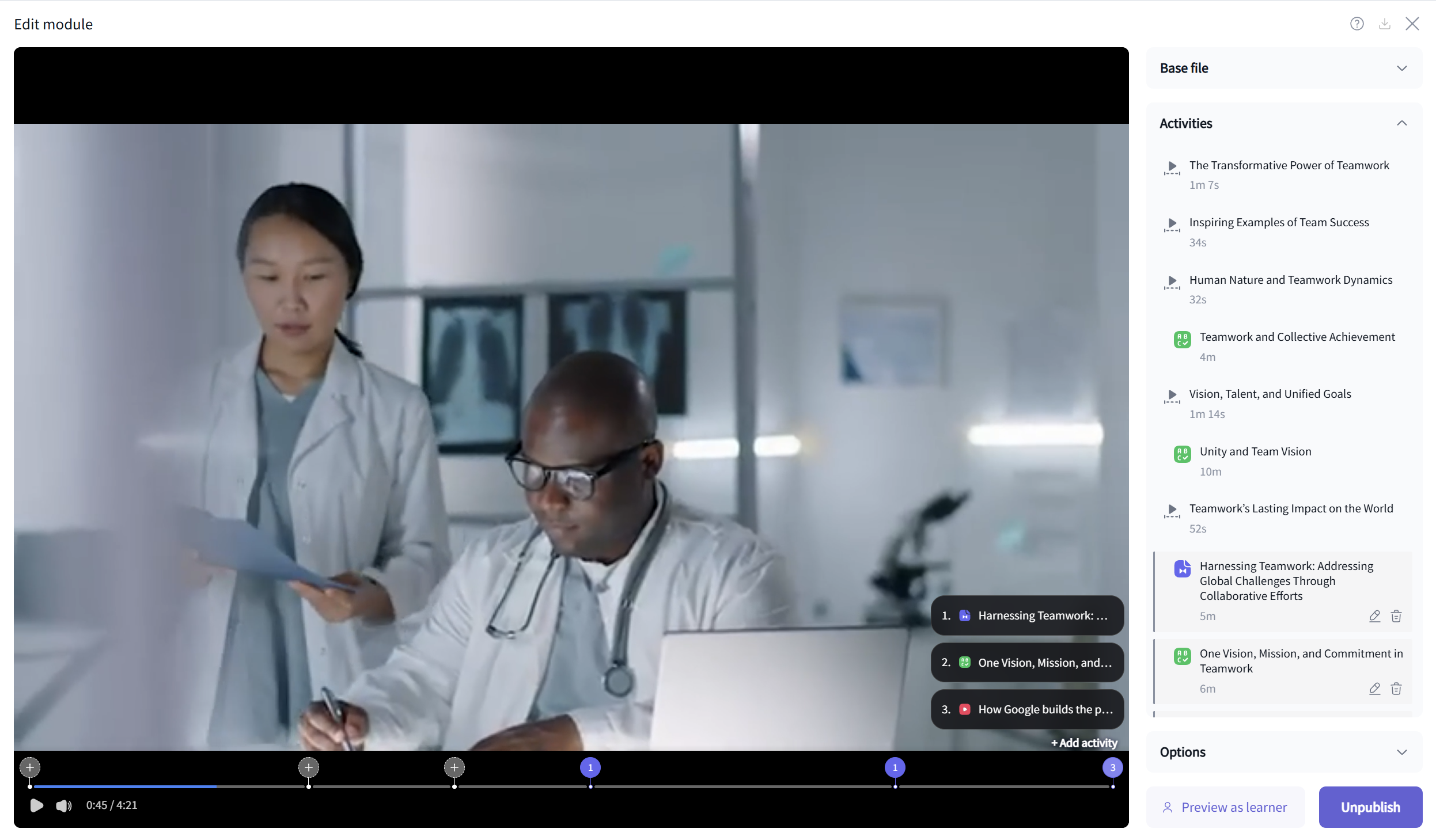
Instructors can also leverage Engageli AI to automatically insert interactive activities at key points in the recording, creating a scaffolded and guided learning experience.
Emerging trend: Active asynchronous learning
As higher education needs for asynchronous learning evolves, the biggest differentiator is shifting from video playback to active learning in ways that more closely mirror a live classroom.
That’s why many institutions are now moving toward interactive asynchronous learning models, where recordings are enhanced with embedded assessments, AI support, analytics, and structured engagement, turning passive content into an active learning experience rather than just “watching a lecture later.”
Frequently Asked Questions
How is an asynchronous learning platform different from watching recorded lectures?
Traditional asynchronous learning often consists of watching recorded lectures and reading course materials with limited opportunities for interaction. A modern asynchronous learning platform transforms recordings into active learning experiences by embedding quizzes, reflection prompts, AI assistance, digital notes, and other interactive activities directly within the lesson. This keeps learners engaged, reinforces understanding throughout the recording, and provides instructors with meaningful insights into learner progress.
Is the LMS an asynchronous learning platform?
The short answer is no. An LMS (Learning Management System) is not an asynchronous learning platform, although it supports traditional asynchronous learning by hosting videos and instructional materials. The primary role is administration and course management rather than delivering an engaging learning experience.
Why is it important to have engagement analytics for asynchronous learners?
Engagement analytics are important for asynchronous learners because they provide visibility into how learners are learning, not just whether they completed a task. In a self-paced environment, instructors lose the visual cues they rely on in a live classroom, such as participation, confusion, or disengagement. Analytics help fill the gap to identify struggling learners early and monitor completion rates.